

Broken Garage Door Spring? Signs, Lifespan and Next Steps
October 30, 2026
Quick answer: The clearest signs of a broken garage door spring are a loud bang from the garage, a visible gap in the spring above the door, a door that suddenly feels very heavy, loose or hanging cables, and an opener that strains or won't lift the door. Many standard torsion springs are rated for about 10,000 open-and-close cycles, which is roughly 7 to 10 years for a typical household. Don't use the door if a spring is broken. Call a technician.
Springs are the hardest-working part of your garage door. They counterbalance the door's weight so the opener, or your arms, only have to move a few pounds instead of a few hundred. When a spring breaks, the whole system feels it. Here's how to recognize a broken spring, why they fail, how long they typically last, and what to do next.
Signs you have a broken garage door spring
A loud bang from the garage
Many homeowners first notice a broken spring as a sudden bang, a bit like a firecracker, often when no one is using the door. That's the sound of a tightly wound spring releasing its tension all at once.
A gap in the spring
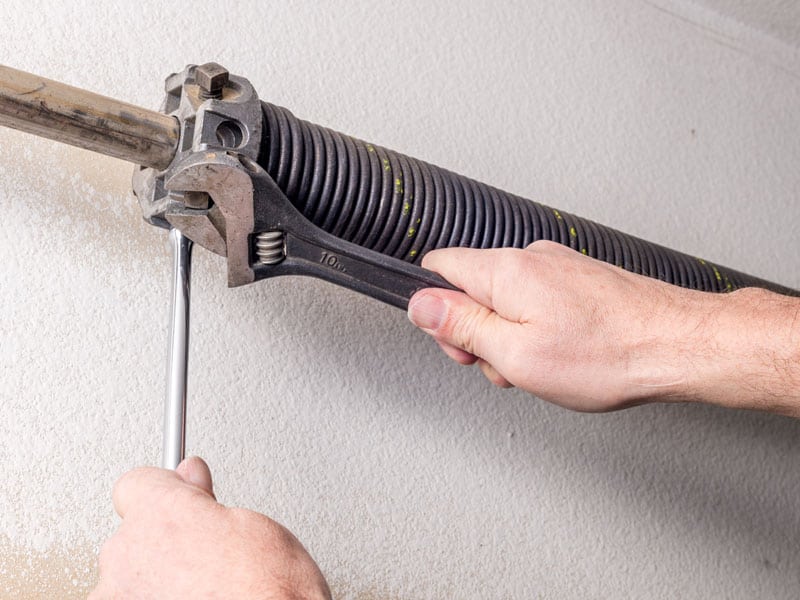
Look at the spring mounted on the bar above your closed door. A broken torsion spring usually shows a clear 2-inch or larger gap where the coil separated. On older doors with extension springs along the side tracks, a broken spring may hang loose or be missing altogether.
The door is suddenly very heavy
A balanced door feels light. If the door feels like it weighs a lot more than it used to when you lift it by hand, the springs aren't doing their job.
The opener strains, stops or only lifts a few inches
Many openers have a safety feature that stops the motor if the load is too heavy. The door may rise a few inches and stop, or the motor may run while the door stays put.
The door goes up crooked or slams shut
On doors with two springs, one broken spring can make the door rise unevenly. A door that drops quickly when it closes is another warning sign, because the springs are no longer slowing it down.
Cables are loose or hanging
When a spring loses tension, the lift cables can go slack and slip off their drums. Loose cables often come with a broken spring.
Torsion vs. extension springs
Most modern doors use torsion springs, which sit on a metal bar above the door and twist to store energy. Some older doors use extension springs, which run along the horizontal tracks and stretch as the door closes. Both do the same job, but they're installed and replaced differently. Our guide to torsion vs. extension garage door springs explains the differences in detail.
How long do garage door springs last?
Spring life is measured in cycles. One cycle is the door opening and closing once. Many standard torsion springs are rated for about 10,000 cycles. Higher-cycle springs are available for families or businesses that use the door many times a day.
Here's what that means in real life:
- Two cycles a day is about 730 a year, or roughly 13 years of use.
- Four cycles a day is about 1,460 a year, or roughly 7 years.
- Six or more cycles a day can wear out a standard spring in 5 years or less.
Many families now use the garage as their front door, so spring life is often shorter than people expect. If you've lived in your home for several years and never replaced the springs, it's worth having them checked.
Why garage door springs break
- Normal wear. Every cycle stresses the steel. Eventually it fatigues and snaps.
- Rust. Rust adds friction and weakens the coils. Damp garages speed it up.
- Cold weather. Steel becomes more brittle in the cold, so springs that are near the end of their life often break on the first frigid mornings of a Michigan winter. Read more about how extreme cold affects garage doors.
- Poor balance or the wrong spring size. A spring that isn't matched to the door's weight works harder and wears out faster.
- Lack of maintenance. Springs that are never inspected or lubricated tend to fail sooner.
What to do if a spring breaks
- Stop using the door. Don't run the opener. It can strip gears, bend the door, or pull it out of its tracks.
- Unplug the opener so no one triggers it by accident.
- Don't try to lift the door by hand. Without spring tension, the door is very heavy and can fall.
- Keep people and pets clear of the door and the area under the springs.
- If your car is trapped inside, make other plans for the day rather than forcing the door.
- Call for service and describe what you heard and saw.
Why spring replacement is a job for a pro
A wound garage door spring stores enough energy to cause serious injury. Replacing one safely takes the right winding bars, the correct replacement spring for your door's weight and size, and training. A technician will also check the cables, drums, bearings and rollers that often wear along with the spring, then balance the door and test the opener's safety reverse.
If one spring on a two-spring door breaks, many technicians recommend replacing both. The other spring has the same number of cycles on it and is often close to failing too. Your technician can explain the options for your door.
How to make your next springs last longer
- Ask about higher-cycle springs if your household uses the garage door often.
- Have the door's balance checked once a year.
- Keep springs lightly lubricated to reduce friction and rust.
- Watch and listen for changes, like a heavier door, uneven movement or new noises.
- Schedule regular maintenance. Our Red Ribbon Service Plans include a complete safety inspection, lubrication and a 25-point check of your door and opener.
Get a broken spring replaced
Overhead Door Company of Battle Creek, Jackson & Ann Arbor repairs broken springs and cables on all garage door brands, offers same-day service calls, and warranties all service. Schedule a garage door repair or contact the location nearest you.
Frequently asked questions
Can I open my garage door with a broken spring?
It isn't safe. Without the spring, the door is very heavy and can fall. Running the opener can also damage it. Leave the door closed and call a technician.
How long do garage door springs last?
Many standard torsion springs are rated for about 10,000 cycles. For most households that works out to roughly 7 to 10 years, but heavy daily use can shorten it.
Why did my garage door spring break in winter?
Cold makes steel more brittle and stiffens lubricant, which adds stress. Springs that are already worn often fail on the first very cold days of the season.
Should I replace both springs if only one broke?
Often, yes. Both springs have the same wear, so the second one is usually close to breaking too. Replacing them together also helps keep the door balanced.
Related posts
If your garage door is off track, stop using it right away. Unplug the opener, keep people and cars clear, and don't try to force the rollers back in. An off-track door is out of balance and can fall. Common causes are a car bumping the door, a broken cable or spring, loose track […]
Most garage doors that won't close are being stopped by the safety system, not by a broken door. Blocked or misaligned safety sensors, an object or ice in the door's path, a remote or wall button problem, or limit settings on the opener cause most cases. Check those first. If the door is […]
Protect your home in extreme weather with garage door prep. Learn maintenance, weatherproofing, and emergency tips for durability.