

Garage Door Rollers: When to Replace Them and Nylon vs. Steel
November 2, 2026
Quick answer: Replace your garage door rollers when they're cracked, wobbly, chipped, flat-spotted or noisy even after lubrication. For most homes, nylon rollers with sealed ball bearings are the best choice because they're much quieter and need little upkeep. Steel rollers are tough and suit heavy or high-use doors, but they're louder and need regular oiling. Most rollers can be swapped by a careful homeowner, but never remove the bottom roller brackets yourself, because they're attached to the lift cables under high spring tension.
Rollers are small parts that do a big job. Every time your door opens, each roller carries part of the door's weight up and around the curve of the track. When they wear out, you hear it: grinding, rattling, squeaking or a jerky ride. Worn rollers can also cause bigger problems, including a door that jumps the track. Here's how to tell when yours are done, how to choose replacements, and what you can safely do yourself.
Signs your garage door rollers need replacing
- Grinding or rumbling noise as the door moves, especially from one spot
- Wobbling wheels that tilt or rock on their stem
- Cracked, chipped or flat-spotted wheels, common on older plastic rollers
- Bearings that are rusty, seized or falling out of steel rollers
- Jerky, uneven travel or a door that shakes on the way up
- Rollers popping out of the track, or a door that has come off track
- Bent roller stems after the door was hit
Look closely with the door closed and again with it open. Spin each roller with your finger where you can reach it. A good roller turns freely and quietly. A bad one sticks, clicks or wobbles.
Types of garage door rollers
Plastic or nylon rollers without bearings
These are the basic rollers that come on many builder-grade doors. They're quiet when new, but the wheel turns directly on the stem, so they wear quickly and can crack in cold weather. If your door has these and they're worn, it's worth upgrading rather than replacing like for like.
Steel rollers
Steel rollers have a steel wheel and steel bearings. They're strong and handle heavy doors and frequent use well. The downsides are noise, since steel rolling in a steel track is loud, and maintenance. Open bearings collect dust and need light oil a few times a year, and in a salty, damp Michigan garage they can rust if they're neglected.
Nylon rollers with ball bearings
These pair a nylon wheel with a steel ball bearing, often sealed. They're the upgrade most homeowners choose. They're noticeably quieter than steel, especially if your garage sits under a bedroom or next to a living area, and sealed bearings keep out dirt and moisture. Look for rollers with more ball bearings and a sealed design for the longest service.
Commercial door rollers
Larger commercial sectional doors often use heavier rollers sized for wider tracks, and the right choice depends on the door's weight and how many times a day it cycles. For warehouses and shops, roller choice is part of a broader preventative maintenance plan.
Nylon vs. steel garage door rollers at a glance
- Noise: nylon with bearings is much quieter.
- Maintenance: sealed nylon needs little care. Steel needs regular light oiling.
- Heavy or high-use doors: steel or heavy-duty nylon rated for the load.
- Winter: quality nylon handles the cold well. Cheap plastic wheels can crack.
- Rust: sealed bearings resist the salt and slush that come into Michigan garages.
Choosing the right size
Most residential doors use 2-inch rollers, and many commercial doors use 3-inch rollers. Stem length matters too: standard stems fit most homes, while longer stems are used where hinges sit farther from the track. The simplest way to match size is to take one roller out (not a bottom one) and compare it, or have a technician check your track and hinges.
A typical residential door has one roller on each side at the top, the bottom and every section joint, so a four-section door usually has ten. Replace them all at once if they're the same age. New rollers next to worn ones make the door run unevenly.
Can you replace garage door rollers yourself?
Many homeowners can replace the middle and top rollers with basic tools and patience. The rollers sit in hinges on each side of the door, and you can usually remove one at a time by loosening the hinge or by guiding the roller out at a gap in the track. Work on one roller at a time so the door stays supported, unplug the opener first, and keep the door closed.
The bottom brackets are different. They hold the bottom rollers and also anchor the lift cables, which are under the full tension of the springs. Loosening them can release that force suddenly and cause serious injury. Leave bottom rollers and brackets to a trained technician. The same goes for any roller job on a door that's off track, crooked or has a loose cable.
Michigan winters are hard on rollers
Garages in Battle Creek, Jackson and Ann Arbor see a lot of moisture through the winter. Cars bring in snow and road salt, it melts, and the humidity settles on the metal parts of the door. Over a few seasons that can rust open steel bearings and stiffen worn rollers. Cold also makes old grease thick and cheap plastic brittle. A door with tired rollers often gets noticeably louder and rougher once temperatures drop.
A few habits help your rollers last:
- Lubricate roller bearings, hinges and springs with a garage door lubricant a couple of times a year. Don't grease the tracks, because grease collects grit.
- Wipe salt and grime off the lower track and rollers in late winter.
- Watch and listen to the door once a month. Catching a bad roller early prevents track damage.
- Book an annual tune-up. Our Red Ribbon Service Plans include inspection and adjustment of rollers, hinges, springs and the opener.
When rollers aren't the real problem
Sometimes a noisy door has good rollers and a different issue: loose hinges, dry springs, a bent track or a worn opener. If new rollers don't quiet the door, see our guide on making a garage door quieter. If the door has slipped out of its track, read what to do when a garage door comes off track before you touch it.
Get help from a local technician
If your rollers are worn, the bottom brackets are involved, or you'd rather have it done right the first time, Overhead Door Company of Battle Creek, Jackson & Ann Arbor can replace rollers and tune up the whole door in one visit. Schedule a garage door repair or contact the location nearest you.
Frequently asked questions
How often should garage door rollers be replaced?
There's no fixed schedule. It depends on the roller type and how often the door runs. Basic plastic rollers wear out much sooner than quality nylon rollers with sealed bearings. Replace them when they're cracked, wobbly, noisy after lubrication or causing rough travel.
Are nylon garage door rollers better than steel?
For most homes, yes. Nylon rollers with ball bearings are much quieter and need less maintenance. Steel rollers are a good choice for very heavy or very high-use doors, but they're louder and need regular oiling.
Is it safe to replace the bottom garage door rollers myself?
No. The bottom brackets also anchor the lift cables, which are under strong spring tension. Removing them without the right tools and training can cause serious injury, so leave bottom rollers to a professional.
Related posts
A small, shallow dent in a steel garage door panel can sometimes be eased out, and a single badly damaged section can often be replaced without buying a whole new door. Replacing just the panel makes sense when the door is in good shape, the […]
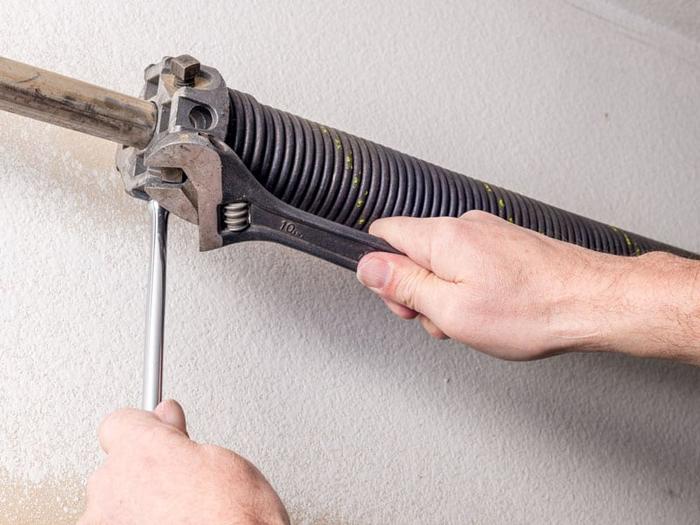
If a garage door cable is broken, frayed or hanging loose, stop using the door and unplug the opener. The cables work with the springs to hold the door's weight, so a failed cable can let one side drop, twist the door and pull it out of its tracks. Keep people and cars away, don't […]
Repair your garage door when the problem is a single worn part, like a spring, cable, roller, opener or one damaged panel, and the door is otherwise sound. Replace it when the door is old and needs repeated repairs, has several damaged sections, is rusted or rotting, has no insulation in a garage you use […]